

Posted On 09 Oct 2026
A pain flareup can change the shape of a day in minutes. You may wake up ready to work, care for your family, run errands, or enjoy time with friends, then find yourself negotiating every movement and wondering what you can possibly get done. Learning how to manage pain flareups is not about forcing yourself through suffering or pretending pain is not real. It is about responding with steadiness, compassion, and practical tools that help you reclaim more ease and choice.
Pain is physical, but your experience of it is rarely physical alone. Stress, fear, grief, frustration, poor sleep, overdoing it, and the pressure to keep performing can all make a hard moment feel even harder. A whole-person response gives you more than one place to begin.
Start by reducing the alarm
When pain rises sharply, the nervous system often interprets it as danger. Your body may tighten. Your breathing may become shallow. Thoughts can race toward worst-case scenarios: I cannot handle this. This will ruin everything. It is never going to stop. Those thoughts are understandable, yet they can add another layer of strain.
Before trying to solve the entire flareup, pause and offer your system a clear message of safety. Sit or lie down in a position that feels supported. Unclench your jaw, soften your shoulders, and take several slower breaths without forcing them. Try placing one hand over your heart and one near the area that hurts, if that feels comfortable. Then say quietly: “This is difficult, and I am here with myself. I can take the next helpful step.”
This is not a promise that the pain will disappear on command. It is a way to interrupt the panic-tension cycle so you can respond rather than react. Even two minutes of calming attention can create a little more space around an intense moment.
How to manage pain flareups with a personal plan
Flareups are easier to meet when you do not have to invent a response while you are hurting. Create a simple pain flareup plan during a calmer time, and keep it where you can find it. A note in your phone, a card by the bed, or a printed page in your bag can be enough.
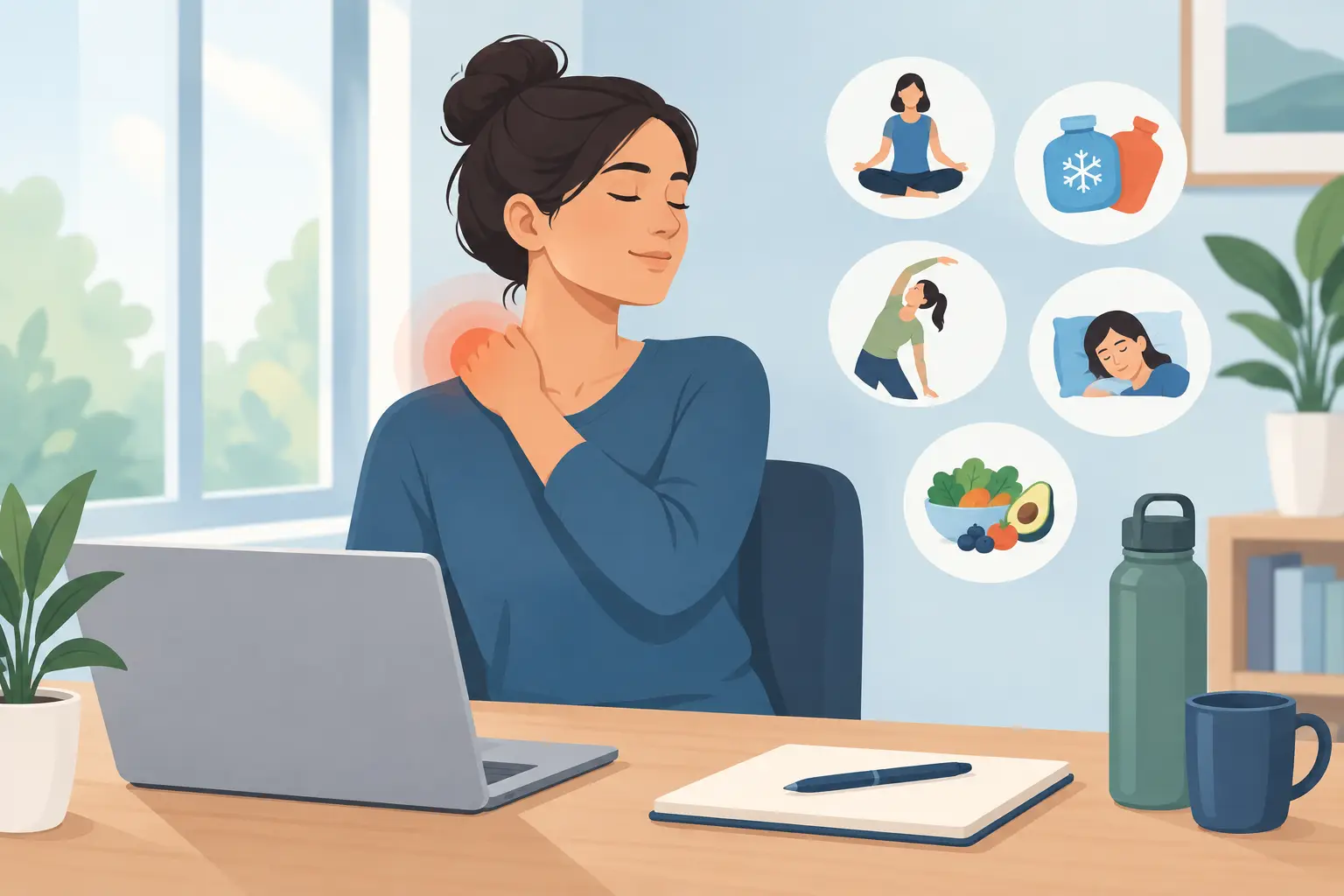
Your plan should begin with what helps your body settle. This might include resting in a supported position, using heat or cold if those methods are appropriate for you, gentle stretching, a warm shower, quiet music, hydration, or a brief walk if movement usually helps rather than aggravates your symptoms. The right choice depends on your condition and what you have learned from your own body.
Next, include emotional support. Pain often brings anger, disappointment, guilt, or sadness, especially when it interrupts commitments and independence. Rather than judging these feelings, name them. You might write, “I am angry that my body is hurting today,” or “I am scared of missing another event.” Naming what is present can reduce the energy spent fighting it.
Finally, include a practical adjustment. Ask, “What is the smallest version of today that still honors what matters?” Maybe you postpone a nonessential task, ask a family member for help, move a meeting, order groceries, or give yourself permission to rest without earning it first. Adapting is not failure. It is self-management.
Pace before the crash
Many recurring flareups have a familiar pattern: a better day arrives, so you try to catch up on everything at once. You clean, work late, exercise hard, carry more, or say yes to plans you have been missing. Then the body protests.
Pacing is not about making your life smaller forever. It is about using your energy in a way that protects your ability to participate over time. Break demanding tasks into shorter blocks and build in pauses before you feel desperate for one. Alternate physical, mental, and emotional demands when possible. If laundry, work deadlines, caregiving, and a difficult conversation all need attention, they do not necessarily need attention in the same hour.
It can help to use a simple traffic-light check-in. Green means your symptoms and energy feel manageable. Yellow means you are noticing more tension, fatigue, irritability, or pain and need to slow down. Red means it is time to stop, rest, and use your flareup plan. The goal is to respond in yellow more often, instead of waiting until you are already in red.
Release the struggle around pain
Pain can become more consuming when it is paired with harsh inner language. Thoughts such as “My body is betraying me,” “I should be stronger,” or “Everyone else can handle more than I can” can leave you feeling isolated and defeated.
A more compassionate approach does not minimize your circumstances. It acknowledges the truth while refusing to add blame. Try replacing judgment with curiosity: “What does my body need right now?” “What stress have I been carrying?” “What am I afraid this flareup means?” These questions may reveal emotional burdens, unresolved grief, resentment, or relentless expectations that have been asking for attention.
For some people, spiritual practices offer another source of grounding. Prayer, meditation, time in nature, gratitude, gentle energy practices, or simply sitting in silence can help restore a sense that you are more than this painful moment. You do not need to have the perfect belief system or a perfectly calm mind. You only need a practice that helps you return to yourself.
Keep a pattern journal, not a blame journal
Tracking pain can be useful when it helps you notice patterns, not when it makes you monitor yourself with fear. Once a day or after a flareup, make a few brief notes about pain intensity, sleep, stress, activity, meals, mood, weather, and anything that felt different. Over several weeks, you may begin to see connections.
Perhaps flareups are more likely after long periods at a desk, skipped meals, conflict, poor sleep, or saying yes when you wanted to say no. Perhaps gentle movement, regular meals, better boundaries, or time to decompress support you more than you realized. Patterns are information, not proof that you caused your pain. Chronic and recurring pain can be complex, and not every flareup will have an obvious explanation.
Use what you learn to make small adjustments. One earlier bedtime, one scheduled stretch break, one honest conversation, or one less obligation can make a difference. Lasting change often grows from repeatable actions, not dramatic overhauls.
Stay connected when pain makes you want to disappear
Pain can make people withdraw because explaining it feels exhausting. You may worry that others will not understand, or you may not want to disappoint anyone again. Yet isolation can make the emotional weight of pain much heavier.
Consider identifying one or two people who can be part of your support circle. Be specific about what helps. You may need someone to listen without fixing, pick up a prescription, handle a school pickup, sit with you, or simply understand when you cancel plans. Clear communication reduces the pressure to appear fine.
Professional wellness support can also help you build skills you can use independently. EnergyMDT’s healing-oriented approach recognizes that physical discomfort, stress, emotions, and personal patterns can be interconnected. The purpose is not dependence on a practitioner. It is learning tools that support your own agency when life feels hard.
Know when a flareup needs medical attention
Holistic self-management can complement medical care, but it should not replace it. Seek urgent medical help for new or severe chest pain, trouble breathing, sudden weakness or numbness, fainting, confusion, a severe sudden headache, loss of bowel or bladder control, a high fever with serious symptoms, or pain after a significant injury. Trust yourself if something feels unusually wrong or different from your typical symptoms.
Contact a qualified health professional when pain is new, worsening, persistent, interfering significantly with daily life, or accompanied by concerning changes such as unexplained weight loss, swelling, weakness, or changes in sensation. If you have a diagnosed condition, follow the care plan you have developed with your medical team and ask them which at-home strategies are appropriate for you.
You deserve support that takes your pain seriously. You also deserve moments that are not organized around pain. The next flareup may still be difficult, but it does not get to define your worth, your future, or your capacity for joy. Meet yourself with patience, take one caring action at a time, and keep choosing the practices that help you come home to greater ease.


