

Posted On 24 Sep 2026
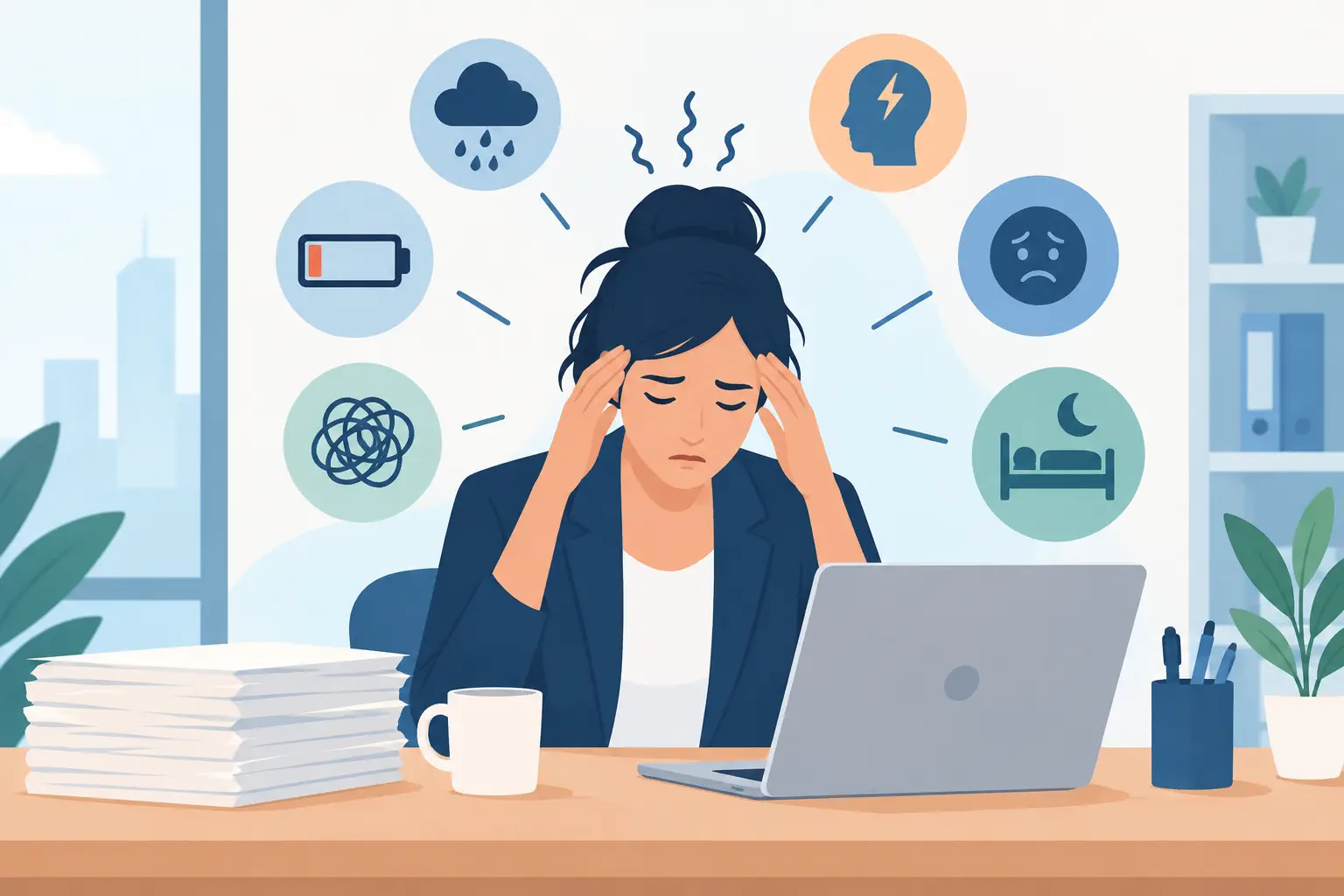
The meeting ends, yet your shoulders stay lifted. You reread a simple email three times and still cannot decide how to reply. You may tell yourself it is just a busy week, but stress warning signs at work often appear long before a person feels ready to call the situation serious. Your body, emotions, thoughts, and energy may already be asking for attention.
Work can bring purpose, connection, creativity, and financial stability. It can also bring relentless demands, unclear expectations, conflict, caregiving pressures at home, and the feeling that there is never enough time to recover. You do not have to wait until stress becomes burnout, illness, or a breaking point to respond. Noticing what is happening is a powerful first step toward reclaiming ease, clarity, and personal agency.
Stress Warning Signs at Work Can Be Easy to Explain Away
Many capable people minimize stress because they are used to pushing through. They may see exhaustion as proof of dedication, irritability as a personality flaw, or headaches as an unavoidable part of a demanding career. But stress is not always loud. Sometimes it shows up as a subtle change in how you feel, think, sleep, communicate, or move through your day.
Physical signs can include tightness in the jaw, neck, shoulders, chest, or stomach; frequent headaches; shallow breathing; digestive discomfort; fatigue that rest does not fully resolve; or a noticeable change in sleep. You may get to work already depleted, rely more heavily on caffeine or sugar, or feel physically restless even when sitting still.
Emotional signs may look like impatience with coworkers, a shorter temper at home, dread before opening your laptop, sadness you cannot quite explain, or numbness toward work you once enjoyed. Some people become tearful. Others become intensely self-critical, withdrawn, or emotionally flat. Neither response means you are weak. Both can be signals that your inner resources are being stretched too far.
Mental signs are often mistaken for a lack of discipline. You might struggle to focus, forget details, procrastinate on tasks you normally handle well, make more errors, or feel unable to prioritize. When the nervous system is on high alert, clear thinking can become more difficult. Your mind is trying to protect you, even if the result is frustration.
There can also be behavioral and relational signals. Perhaps you skip breaks, work through lunch, avoid colleagues, stay online late to catch up, or find yourself reacting defensively to ordinary feedback. You may say yes to every request while quietly resenting the pressure. These patterns are not personal failures. They are invitations to pause and ask what needs care.
Why Work Stress Is More Than a Work Problem
Stress does not always stay at the office or disappear when you close your computer. An unresolved conflict, a constant sense of urgency, or the fear of disappointing others can follow you into meals, sleep, family time, and weekends. Over time, the body may learn to remain guarded even in moments that should feel safe.
At EnergyMDT, we view stress as an interconnected experience. Physical discomfort, emotional pain, recurring thoughts, personal habits, and deeper beliefs can reinforce one another. For example, a person who believes they must be perfect to be valued may overwork, ignore fatigue, become tense and irritable, then judge themselves for not coping better. The cycle can feel automatic, but it can be changed.
This does not mean every workplace challenge can be resolved through mindset alone. An unhealthy manager, understaffing, discrimination, financial pressure, or unrealistic workload requires practical action and, at times, organizational support. Holistic self-care is not about accepting what is unacceptable. It is about helping you stay connected to yourself as you decide what boundaries, conversations, resources, or changes are needed.
Notice Your Personal Pattern Before It Escalates
A useful question is not simply, “Am I stressed?” It is, “How does stress show up in me?” Your answer may be different from a coworker’s. One person may overfunction and become hyperproductive. Another may freeze, avoid tasks, or lose motivation. Both deserve compassion and practical support.
For one week, take brief notes at the beginning, middle, and end of your workday. Rate your stress from zero to ten. Notice where you feel tension in your body, what thoughts repeat most often, and what happened shortly before your stress rose. You may discover that your stress spikes after certain meetings, during rushed transitions, when you skip food or water, or when you take on work that belongs to someone else.
Also pay attention to what brings even a small shift toward calm. It may be five quiet minutes in your car, a supportive conversation, a walk outside, prayer, music, stretching, or placing both feet on the floor before a difficult call. Small moments of regulation matter. They remind your system that stress is present, but it does not have to control every moment.
Practical Ways to Respond During the Workday
You do not need a perfect wellness routine to begin feeling more supported. The goal is to create small, repeatable practices that help your body and mind return to the present.
Start with your breath. Before opening an email, entering a meeting, or responding to a tense message, let your exhale become slightly longer than your inhale. Try breathing in comfortably, then breathing out slowly for a few rounds. There is no need to force deep breaths. Gentle breathing can signal safety to the body and interrupt the rush to react.
Give your body a reset. Drop your shoulders, unclench your jaw, relax your hands, and feel the support beneath your feet. If possible, stand up, look away from the screen, and move for two minutes. Stress often builds when the body holds the same protective posture for hours.
Create a pause between pressure and response. If an email triggers anger or fear, write a draft and wait before sending it. If a colleague asks for something you cannot reasonably take on, practice a clear response such as, “I can help with this by Thursday,” or, “My current priorities will not allow me to add this today.” A boundary is not a rejection of others. It is a way of honoring your capacity.
Name what is true without making it your identity. Instead of saying, “I am failing,” try, “I am feeling overwhelmed right now.” Instead of, “This will never get better,” try, “This situation is difficult, and I can take one supportive step.” This shift may sound simple, yet it creates space between you and the stress story your mind is repeating.
Release What You Carry Home
Many working adults finish the day physically home but emotionally still at work. A brief transition ritual can help. Before you leave your workspace, write down what is unfinished and the next step for tomorrow. This tells your mind it does not have to hold every detail overnight.
Then choose a simple action that marks the end of the workday: wash your hands slowly, change clothes, take a short walk, stretch, sit in your car for a minute of quiet, or listen to music that helps you reconnect with yourself. The practice matters more than making it elaborate. You are teaching yourself that you are more than your role, your inbox, or your productivity.
If anger, grief, fear, or resentment keep resurfacing, give those emotions a safe place to be acknowledged. Journaling, guided wellness practices, supportive facilitation, and energy-based approaches can help some people explore the emotional patterns beneath ongoing stress. The right approach depends on your needs, beliefs, health history, and the level of support you want.
When to Seek More Support
Consider reaching out for additional help if stress feels constant, disrupts sleep for weeks, leads to frequent physical symptoms, affects your relationships, or makes daily tasks feel unmanageable. A trusted health professional or mental health provider can help you assess what is happening. If you are experiencing thoughts of harming yourself or feel unsafe, seek immediate crisis support or emergency assistance.
Support can also be preventive. You do not need to be in crisis to learn skills for calming your nervous system, releasing emotional pressure, communicating boundaries, and caring for your energy. Choosing support is not giving away your power. It is an act of reclaiming it.
Your work matters, but so do your health, your relationships, your rest, and your joy. When your body begins to whisper through tension, fatigue, frustration, or disconnection, listen with kindness. One intentional breath, one honest boundary, and one moment of self-awareness can become the beginning of a different way to live. Start giving yourself that moment today.


