

Posted On 24 Sep 2026
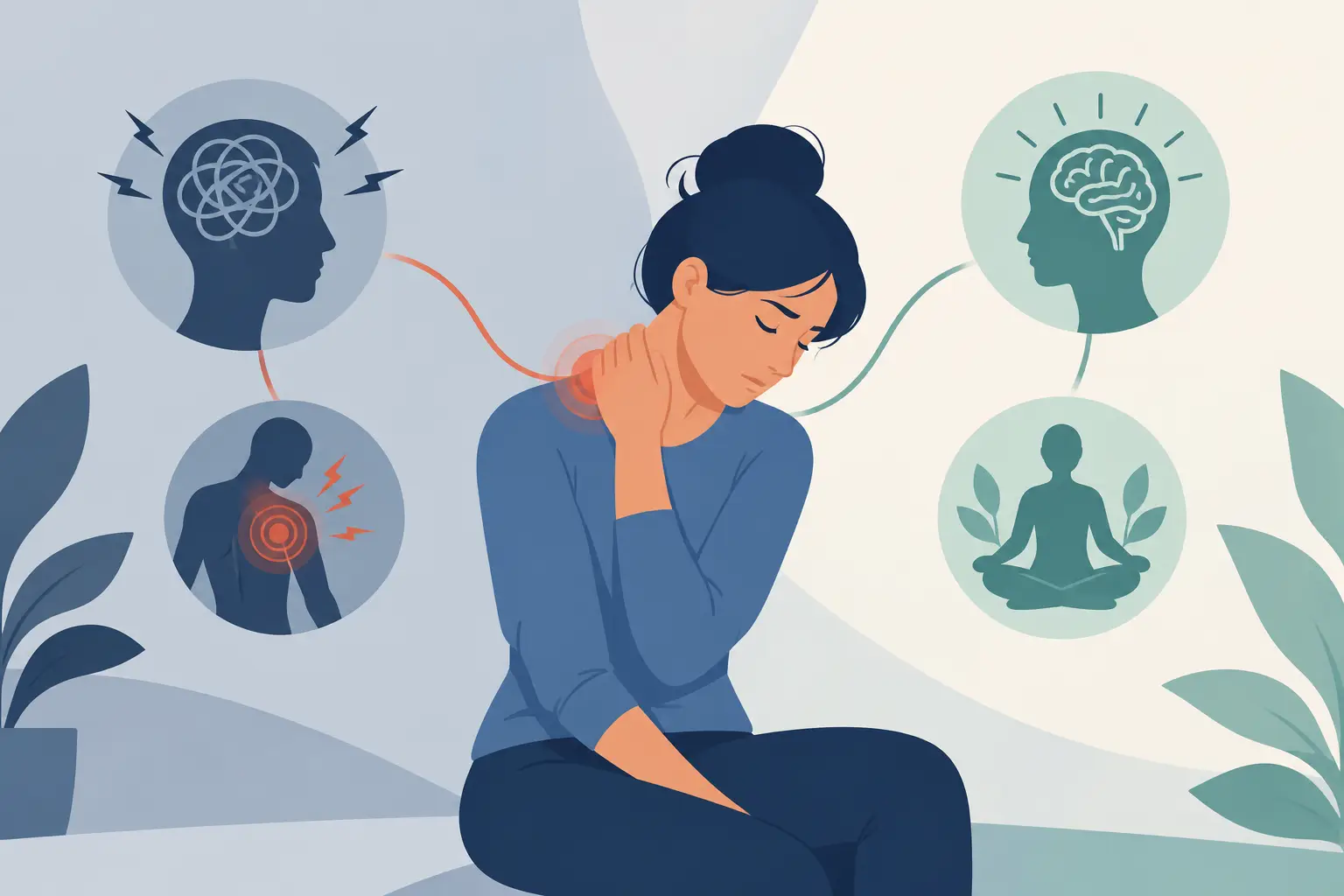
A tight neck before a difficult meeting. A headache after a week of caregiving. Back pain that flares when sleep is short and worries are loud. These experiences are not imagined, exaggerated, or a personal failure. The pain stress connection is real: when your system stays on alert, your body can become more sensitive, tense, depleted, and less able to recover.
For many people, the frustrating part is that pain seems to take over everything. It can affect work, mobility, patience, relationships, and confidence. You may begin planning your life around the next flare-up. Yet pain is not always a fixed command from the body. It can also be information. When you learn to listen without fear and respond with practical care, you can begin creating more ease.
How the Pain Stress Connection Works
Stress is not only a thought in your mind. It is a whole-body response. When your brain perceives pressure, danger, conflict, loss, uncertainty, or even an old emotional wound, it can activate survival chemistry. Your heart rate may rise, breathing may become shallow, muscles may brace, and digestion, sleep, and immune function may shift.
This response is useful when there is immediate danger. The problem comes when the body has little opportunity to return to safety. A demanding job, financial strain, family conflict, grief, chronic caregiving, unresolved anger, or a history of trauma can keep the stress response running in the background. Even if you are sitting still, your nervous system may be working overtime.
Muscle tension alone can contribute to soreness, headaches, jaw pain, and stiffness. But the connection goes further. Ongoing stress can lower your threshold for discomfort, disrupt restorative sleep, increase inflammation-related processes, and make the brain pay closer attention to sensations that might otherwise fade into the background. Pain can then create more worry, less movement, and more tension. That becomes a cycle.
This does not mean that all pain is caused by stress or that a physical condition should be dismissed as “just emotional.” Injuries, arthritis, nerve conditions, autoimmune concerns, and many other health issues deserve appropriate medical evaluation and care. Stress management is not a replacement for diagnosis or treatment. It is a powerful layer of support that can help your whole system cope, recover, and respond differently.
Why Emotions Can Show Up in the Body
Many adults have learned to push through. We swallow anger to keep peace, postpone grief because there is too much to do, and ignore exhaustion because someone depends on us. The body may carry what the mind has not had space to process.
That does not mean every painful shoulder contains one specific hidden emotion. Bodies are more complex than that. Still, patterns are worth noticing. Does your pain intensify after conflict? Does it lessen when you feel supported or absorbed in something meaningful? Do symptoms appear when you are overcommitted, lonely, resentful, or afraid to disappoint someone?
Curiosity is more helpful than judgment. Rather than asking, “What is wrong with me?” try asking, “What has my body been carrying?” That question creates room for compassion. It also opens the door to choices that honor both your physical needs and your emotional truth.
Unprocessed stress is not always dramatic. It may look like constantly rushing, checking your phone late at night, saying yes when you mean no, criticizing yourself, or never allowing a moment of rest. These habits can teach the nervous system that it is never quite safe to stand down.
Signs Your System May Be Stuck on High Alert
Pain and stress do not look identical for everyone. Some people feel wired and restless. Others feel numb, foggy, or deeply fatigued. Pay attention if you notice several patterns occurring together:
- Pain that increases during emotionally demanding periods
- Tight shoulders, clenched teeth, shallow breathing, or frequent headaches
- Poor sleep followed by stronger pain or lower patience the next day
- Feeling easily startled, irritable, overwhelmed, or unable to relax
- Avoiding movement because discomfort feels frightening
- A sense that your body is always bracing for the next problem
These signs are not proof that you have done anything wrong. They are invitations to give your body a new message: there is support available now.
Practical Ways to Interrupt the Cycle
The goal is not to force yourself to be calm or pretend pain is gone. The goal is to give your mind and body repeated experiences of safety, release, and choice. Small practices matter because the nervous system learns through repetition.
Begin with a 90-second reset
When pain or stress rises, pause before reacting. Put both feet on the floor if you can. Let your shoulders drop. Breathe in gently through your nose, then make the exhale a little longer than the inhale. Look around the room and name three neutral things you can see.
This is not a magic trick, and it may not erase pain immediately. It can reduce the added layer of alarm that often makes discomfort feel bigger. Practice during calm moments too, so the skill is familiar when you need it.
Respond to tension with kindness, not force
Many people try to stretch, exercise, or massage pain away aggressively. Sometimes that helps. Other times, pushing hard reinforces the message that the body is under attack. Experiment with gentle movement instead: a short walk, slow shoulder circles, easy range-of-motion work, or a warm shower followed by rest.
The right approach depends on your condition. If movement increases sharp pain, weakness, numbness, dizziness, or new symptoms, stop and seek medical guidance. Healing is not about proving toughness. It is about learning what helps your body feel supported.
Give emotions a safe outlet
Emotions need movement too. You might journal for five minutes without editing yourself, speak honestly with a trusted person, cry, pray, create art, or sit quietly and name what is present. Anger, grief, fear, and disappointment do not make you negative. They make you human.
Try this simple prompt: “If my pain could speak with compassion, what might it ask for today?” The answer may be rest. It may be a boundary. It may be help. It may be permission to stop carrying everyone else’s needs alone.
Protect recovery time
A nervous system cannot reset if every hour is filled with demand. Recovery does not have to mean a weekend retreat. It may mean taking three slow breaths before opening your inbox, stepping outside at lunch, turning off notifications in the evening, or choosing one less obligation this week.
Sleep deserves special attention. Pain often disrupts sleep, and poor sleep can increase pain sensitivity the next day. Create a simple wind-down ritual that signals completion: lower the lights, reduce stimulating content, write down tomorrow’s tasks, and use a calming breath or body scan. Consistency matters more than perfection.
Reclaiming Agency Without Blaming Yourself
One of the most empowering parts of understanding the pain stress connection is recognizing that you have influence. You may not control every diagnosis, demand, memory, or symptom. But you can build skills that change how your system moves through difficult moments.
That influence should never become self-blame. If you are in pain, you do not need to think happier thoughts or become spiritually perfect. You need effective support, honest self-awareness, and tools you can return to when life gets hard. A healing-oriented approach may include medical care, physical therapy, counseling, community support, gentle movement, stress-reduction practices, and energy-based wellness techniques. The best combination depends on your needs.
EnergyMDT’s work is grounded in this practical truth: you can learn methods that support your own well-being beyond a single appointment or difficult day. Freedom grows when you have tools in your hands.
If pain is severe, sudden, worsening, follows an injury, or comes with symptoms such as chest pain, trouble breathing, fever, fainting, weakness, or changes in bladder or bowel control, seek urgent medical care. For persistent pain, a qualified health professional can help you understand possible causes while you build stress-management support around that care.
Today, choose one small act that tells your body it does not have to fight alone. Sit quietly. Soften your jaw. Ask for help. Take a gentle walk. Let one feeling be felt instead of buried. Each compassionate choice is a way of reclaiming your health, your ease, and your right to a more joyful life.


