

Posted On 18 Sep 2026
Pain can make your body feel like a place you have to brace against. You may wake up already anticipating the ache in your back, the stiffness in your hands, the headache waiting behind your eyes, or the fatigue that follows a difficult night. A body scan for chronic pain offers a different starting point: not fighting your body, ignoring it, or demanding that it change immediately, but listening to it with steady, compassionate attention.
That may sound simple. It is also deeply practical. When pain has been present for weeks, months, or years, the nervous system can become watchful and reactive. Muscles tighten. Thoughts race ahead. Emotions that have had no safe outlet can add another layer of strain. A body scan helps you notice these patterns without adding fear, judgment, or pressure. From that awareness, you can begin choosing a more supportive response.
Why Chronic Pain Needs More Than Pushing Through
Chronic pain is not a character flaw, and it is not proof that you are weak. It can affect your sleep, mobility, work, relationships, mood, and confidence. It can also make every ordinary decision feel heavier: Can I drive today? Can I lift that bag? Will I have the energy to be present with my family tonight?
Many people respond by pushing harder until they crash, or by avoiding movement, rest, emotions, and activities that once brought them joy. Neither response means you have failed. They are understandable survival strategies. Yet they can leave you feeling disconnected from your own inner guidance.
A body scan does not promise to erase every symptom. Pain can have medical, structural, inflammatory, neurological, emotional, and stress-related contributors. What this practice can do is help reduce the extra suffering created by constant alarm. It gives you a repeatable way to check in with your physical sensations, your emotional state, and the energy you are carrying before tension builds further.
What a Body Scan for Chronic Pain Really Is
A body scan is a guided attention practice. You bring awareness through different areas of your body, usually slowly, and notice what is there. You might identify warmth, coolness, pressure, throbbing, numbness, tightness, tingling, restlessness, or ease. You may also notice emotions, memories, or beliefs that arise alongside physical discomfort.
The goal is not to force relaxation. Trying to “make” a painful area relax can create more frustration. The goal is to meet each sensation honestly and gently. Instead of thinking, “My shoulder is ruining everything,” you might practice saying, “There is tightness in my shoulder. I am here with it. I can breathe and soften what is available to soften.”
That small shift matters. It moves you from being completely identified with pain to becoming the aware person who can observe, care for, and respond to what the body is communicating.
For some people, a scan feels calming right away. For others, especially people carrying trauma or intense anxiety, turning inward can initially feel uncomfortable. Both experiences are valid. Go slowly, keep your eyes open if that feels safer, and shorten the practice whenever needed. Your body deserves consent and kindness, not another demand.
A Gentle Practice You Can Use Today
Choose a time when you are unlikely to be interrupted. You can lie down, sit in a supportive chair, or even practice while standing if lying flat increases discomfort. There is no perfect position. Comfort is the priority.
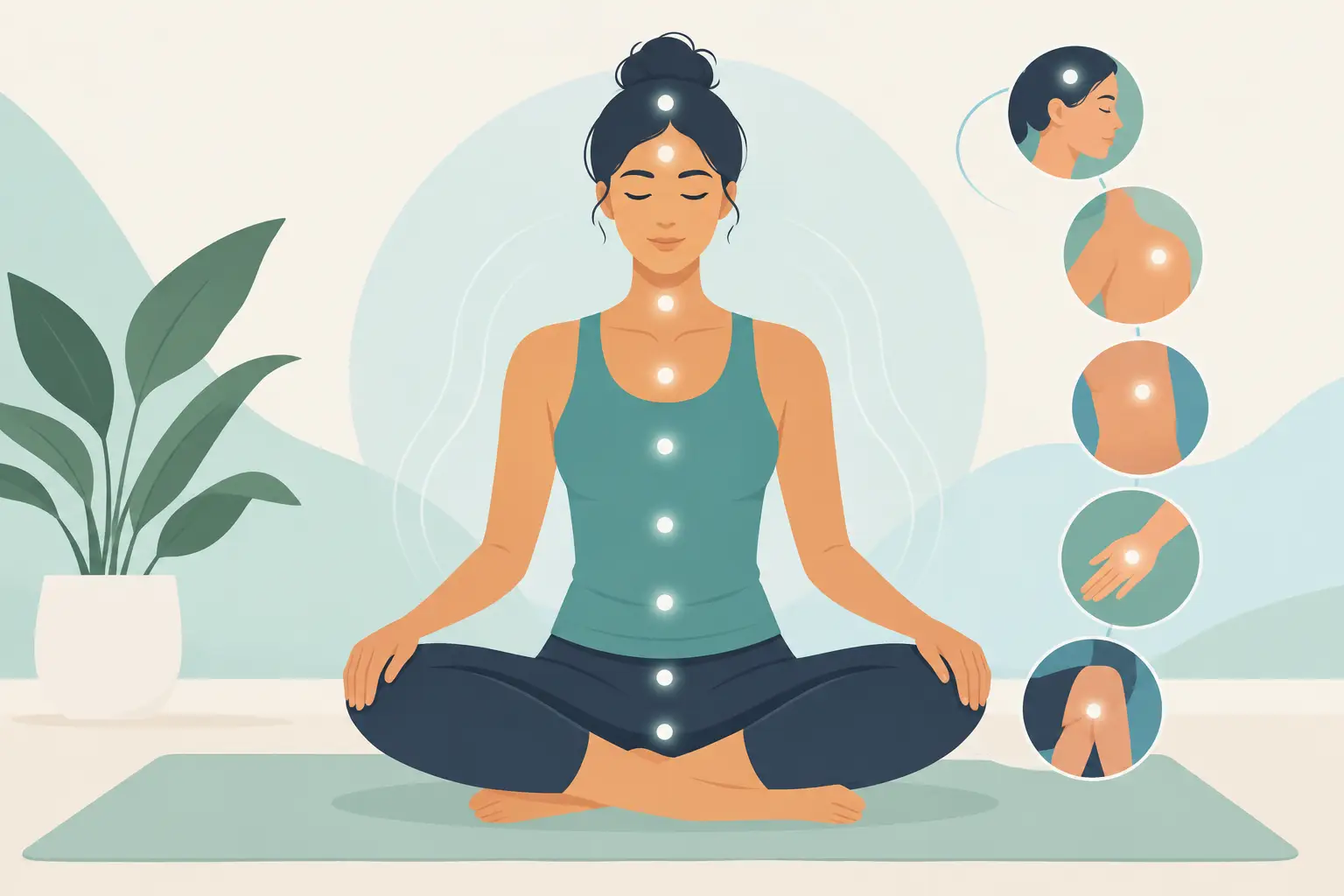
Begin by noticing the support beneath you. Feel the chair, bed, or floor holding your weight. Let your jaw unclench if it can. Allow your hands to rest. Take one natural breath, then another. You do not need to breathe deeply if deep breaths are uncomfortable. Simply let the breath be present.
Bring your attention to your feet. Ask quietly: What do I notice here? Do not search for a particular answer. Notice temperature, contact, tension, or the absence of sensation. If you find pain, try naming it without a story: sharp, dull, tight, hot, pulsing, heavy. Then offer a phrase such as, “I hear you,” or, “You do not have to carry this alone.”
Move your attention gradually through your ankles, calves, knees, thighs, hips, lower back, abdomen, chest, upper back, shoulders, arms, hands, neck, face, and scalp. Spend more time where your body asks for it, but do not force yourself to stay with an area that feels overwhelming. You can shift to a neutral area, such as your hands or feet, and return later if you choose.
As you scan, see whether any area can release by just one percent. Not completely. Just one percent. Maybe your shoulders drop slightly. Maybe your belly stops gripping. Maybe the muscles around the painful place soften even if the pain itself remains. These are meaningful changes. They teach your nervous system that it has options besides bracing.
When you reach the end, place a hand where it feels comforting, perhaps over your heart, abdomen, or shoulder. Ask yourself, “What do I need next?” The answer may be water, rest, a gentle stretch, a boundary, a conversation, a walk, or professional support. Let the practice lead to one caring action.
When Emotions Show Up in the Scan
The body often holds more than physical tension. Anger may live in a clenched jaw. Grief may feel like heaviness in the chest. Fear can settle in the stomach or create a constant buzz beneath the skin. These connections do not mean your pain is imaginary. They mean you are a whole person, and your physical, emotional, mental, and spiritual experiences influence one another.
If an emotion arises, resist the urge to judge it or solve it immediately. You might say, “There is sadness here,” or, “I notice fear.” Then let yourself breathe with it for a few moments. If tears come, that can be a release. If nothing comes, that is okay too. Healing is not a performance.
You may find it helpful to journal for a few minutes after your scan. Write down what you noticed, what felt lighter, and what felt difficult. Over time, patterns can become clearer. Perhaps your neck pain intensifies after conflict, your hips tighten when you skip rest, or your headaches increase when you carry everyone else’s needs without speaking your own. Awareness gives you a place to begin making different choices.
Make the Practice Sustainable, Not Perfect
A five-minute body scan done regularly can be more supportive than a 30-minute practice you only do when you are desperate. Consider pairing it with an existing routine: before getting out of bed, after work, before sleep, or while sitting in the car before you enter your home.
On high-pain days, make the scan smaller. Notice only your hands, your breath, and the support beneath you. On better days, you may want to explore the full body with more spaciousness. The practice should meet you where you are, not become another task that proves you are falling behind.
It also helps to release the expectation that every scan must bring immediate relief. Some days, the gift is reduced pain. Other days, it is realizing you need to cancel an unnecessary obligation, ask for help, or stop speaking harshly to yourself. That is still progress toward a life with more freedom and ease.
Know When to Get Additional Care
A body scan is a self-management tool, not a substitute for medical evaluation. Seek prompt medical care for new or severe symptoms, chest pain, sudden weakness, loss of bladder or bowel control, significant injury, fever with severe pain, or any symptom that feels alarming or rapidly worsens.
For ongoing pain, a well-rounded care plan may include medical providers, physical therapy, counseling, movement support, and complementary wellness practices. It depends on your symptoms, history, diagnosis, access to care, and personal needs. You do not have to choose between practical healthcare and whole-person support. You deserve both clear information and compassionate tools.
At EnergyMDT, the focus is on helping people build reusable practices for stress, pain, emotional release, and greater personal agency. A body scan can be one small but powerful part of that path. Do NOT let pain control every decision you make. Begin with a few quiet minutes, listen without judgment, and let your body know that you are willing to stand beside it today.

