

Posted On 16 Oct 2026
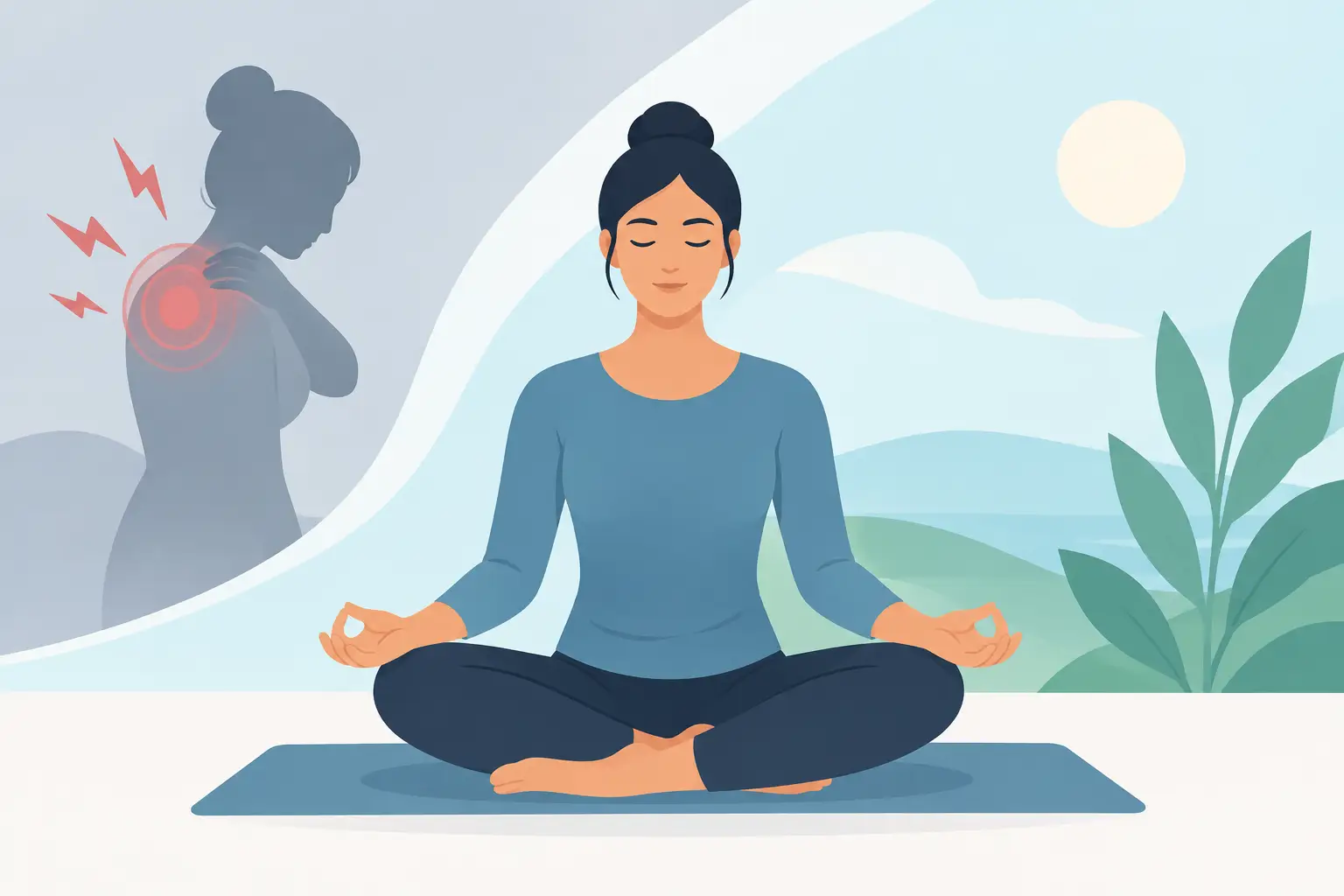
Pain can change the shape of a day. It can make getting dressed feel like work, shorten your patience with people you love, interrupt sleep, and leave you wondering how much of your life you have to plan around it. So, can meditation reduce pain? For many people, it can become a meaningful part of pain relief – not by pretending the pain is imaginary, but by helping the body and mind stop adding layers of tension, fear, and stress to an already difficult experience.
Meditation is not a magic switch, and it is not a replacement for appropriate medical care. Yet it is a skill you can carry with you: during a flare-up, before a stressful meeting, while waiting in a medical office, or in the quiet moments before bed. With practice, it can help you reclaim more ease, choice, and confidence.
Can Meditation Reduce Pain by Changing Your Response?
Pain is physical, but it is also an experience shaped by the nervous system. When the body senses possible danger, it sends protective signals. Stress, poor sleep, worry, grief, anger, and past emotional hurt can keep that alarm system on high alert. This does not mean pain is “all in your head.” It means your whole being is involved, and your whole being deserves support.
Meditation can help create a pause between the sensation and the alarm that often follows it. Instead of immediately tightening your muscles, holding your breath, catastrophizing, or bracing for the worst, you practice noticing what is here with steadiness. That calmer response may reduce muscle tension and support a less reactive nervous system.
For someone with recurring back pain, for example, the first signal of stiffness may trigger the thought, “Here we go again. My whole day is ruined.” The fear is understandable. But fear can also lead to shallow breathing, guarding, and more tension. A meditation practice creates room for a different response: “This is uncomfortable. I can breathe. I can soften what is safe to soften. I can take the next helpful step.”
That shift does not deny reality. It reduces the extra suffering that can grow around pain.
What Meditation May Help With
Research and lived experience both suggest that mindfulness and related meditation practices may help some people reduce pain intensity, emotional distress around pain, or the way pain interferes with daily life. The results vary. A person with acute injury pain, migraine, arthritis, fibromyalgia, nerve pain, or pain connected to trauma may each need a different combination of support.
Meditation is often especially helpful when pain and stress feed one another. Chronic pain can create worry and exhaustion. Worry and exhaustion can make the nervous system more sensitive. Meditation gently interrupts that cycle by training attention, settling the breath, and bringing awareness to habitual reactions.
Benefits may include better sleep, less stress-driven muscle holding, improved awareness of personal triggers, and greater emotional balance. Many people also appreciate that meditation gives them something they can do for themselves. That sense of agency matters when pain has made life feel small or unpredictable.
At the same time, meditation may not dramatically lower physical sensations for everyone. Sometimes its greatest benefit is helping you meet pain without panic, isolation, or the feeling that you have lost yourself. That is not a small result. It can make it easier to stay connected to work, family, movement, pleasure, and hope.
The Practice Is Not About Forcing Yourself to Relax
People often think meditation means clearing the mind or sitting perfectly still for 30 minutes. It does not. If sitting increases your discomfort, lie down, stand, walk slowly, or rest in a supportive chair. If closing your eyes feels unsafe or unsettling, keep them open and let your gaze rest softly on one spot.
The goal is not to overpower pain with positivity. Telling yourself everything is fine when it is not can create more internal struggle. Instead, meditation invites honesty without judgment. You might notice, “There is throbbing in my shoulder,” or “My jaw is clenched,” or “I am afraid this will get worse.” Naming what is present can reduce the exhausting effort of fighting your own experience.
For some people, focusing directly on a painful area feels supportive. For others, especially those carrying trauma or intense anxiety, it may feel overwhelming. Start with an anchor that feels safer: the sensation of your feet on the floor, sounds in the room, a hand over your heart, or the natural rise and fall of the breath. You control where your attention goes.
A Five-Minute Meditation for Pain and Stress
Use this short practice when you want gentle support. Five minutes is enough to begin. Consistency matters more than perfection.
First, choose a position your body can tolerate. Let your shoulders be supported if possible. Unclench your jaw without forcing it, and allow your hands to rest.
Take a slow breath in through your nose if that is comfortable. Exhale a little longer than you inhaled. Repeat several times. There is no need to take huge breaths. Easy, unstrained breathing sends a kinder message to the body.
Next, notice three things: the places that feel uncomfortable, the places that feel neutral, and the places that feel even slightly supported. Perhaps your lower back hurts, but your hands feel warm. Perhaps your knees ache, but the chair holds you. This helps attention become more spacious than the pain alone.
If thoughts arrive, do not argue with them. Simply say silently, “Thinking,” and return to your breath or your points of support. If you notice fear, try: “I am here. This is hard. I can meet this moment one breath at a time.”
Finish by asking, “What would support me in the next hour?” The answer may be water, a stretch, a walk, rest, a conversation, a medical appointment, or another minute of quiet. Meditation becomes more powerful when it leads to compassionate action.
Make Meditation a Tool You Can Actually Use
A practice that only happens on your best days will not serve you when pain is demanding your attention. Make it small and realistic. Try two minutes after brushing your teeth, five minutes before sleep, or three slow breaths before responding to a stressful email. Repetition teaches your system that calm is available more often than it may seem.
It can help to separate meditation from the expectation of immediate relief. If you sit down thinking, “This must make my pain disappear,” every sensation may feel like proof that you failed. Instead, approach the practice as a check-in: “For the next few minutes, I am giving my body and mind a chance to settle.” Relief may come quickly, gradually, or in a quieter form, such as less fear or more patience.
You can also pair meditation with other supportive habits. Gentle movement, hydration, nourishing food, restorative sleep, meaningful connection, and appropriate medical care all affect the body’s capacity to heal and regulate. Pain rarely has one cause or one solution. A whole-person approach honors that truth.
When to Seek More Support
Do not use meditation to push through warning signs. New, severe, rapidly worsening, or unexplained pain deserves prompt medical evaluation. Seek urgent care for symptoms such as chest pain, trouble breathing, sudden weakness or numbness, confusion, a severe new headache, loss of bladder or bowel control, or pain after a major injury.
For ongoing pain, consider meditation with one member of your support team. A qualified healthcare professional can help assess physical causes and treatment options. A skilled wellness facilitator can help you explore the stress patterns, emotional burdens, beliefs, and daily habits that may be increasing your suffering.
You do not have to choose between practical health care and inner healing. Both can belong in your life. At EnergyMDT, the focus is on learning reusable tools that help you address physical, emotional, mental, and spiritual strain with greater awareness and self-direction.
Pain may be asking for attention, not surrender. Begin with one gentle breath, one honest check-in, and one small act of care. You deserve support that helps you feel more at home in your body and more free to live your life.


