

Posted On 12 Oct 2026
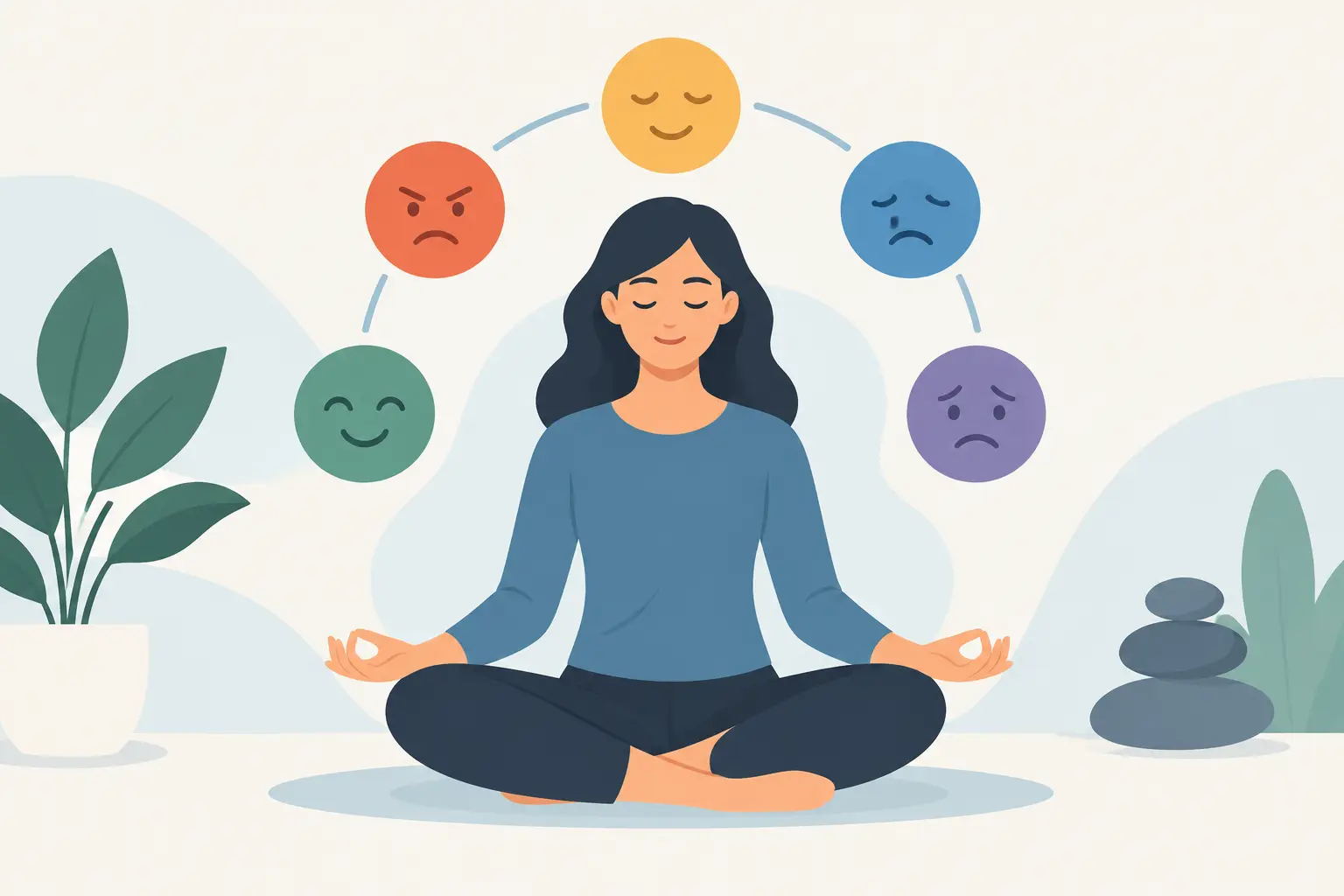
A sharp reply to your partner. A tight chest before a meeting. Grief that appears in the grocery store aisle without warning. These moments can feel as if they are controlling you, but they are signals, not proof that something is wrong with you. This guide to emotional regulation is about learning to meet those signals with awareness, compassion, and practical action so you can reclaim more ease in your day.
Emotional regulation does not mean becoming calm all the time. It does not mean suppressing anger, rushing past grief, or forcing a positive mindset when you are hurting. It means building the ability to notice what is happening inside you, create enough space to choose your response, and support your body through the experience. That ability can change how you work, sleep, communicate, manage pain, and show up for the people you love.
What Emotional Regulation Really Means
Emotions are information. Anger may point to a crossed boundary. Anxiety may reflect uncertainty, overstimulation, or a nervous system that has been on high alert for too long. Sadness may be asking for acknowledgment, rest, or connection. When we judge these experiences as bad or try to push them away, they often become louder.
Regulation is the practice of staying connected to yourself while an emotion moves through you. You may still feel upset. The difference is that you are less likely to send the text you regret, shut down during a difficult conversation, reach for a habit that leaves you feeling worse, or carry tension in your body for days.
For many people, stress and physical pain are closely linked. A clenched jaw, shallow breathing, headaches, fatigue, stomach discomfort, or muscle tension can be part of the body’s response to unprocessed emotion. That does not mean pain is imaginary. It means your whole experience deserves care: physical, emotional, mental, and spiritual.
Why Strong Emotions Can Feel So Overwhelming
When your nervous system senses danger, it prioritizes protection. Your heart rate may rise, your muscles may tighten, and clear thinking may become harder. This response is useful during immediate threats. It becomes exhausting when your body reacts to a demanding inbox, family conflict, financial worries, chronic pain, or memories of past hardship as though danger is happening right now.
You may recognize a familiar cycle: something triggers you, your body reacts, your thoughts race, and you either explode, withdraw, numb out, or try to power through. Later, you may criticize yourself for how you handled it. That self-judgment adds another layer of stress.
The goal is not to blame yourself for your reactions. Your patterns often developed for a reason. They may have helped you survive a difficult environment, meet others’ expectations, or keep going when rest did not feel possible. Yet a pattern that once protected you can become limiting when it keeps you from peace, honest connection, or physical relief.
A Guide to Emotional Regulation in the Moment
The most useful techniques are the ones you can remember when life gets real. Start small. Trying to solve every emotional pattern at once can create more pressure. Instead, practice creating a pause between the trigger and your next action.
Name the experience without becoming it
Begin with simple language: “I am noticing anger.” “I am feeling overwhelmed.” “My body is tense, and I am afraid.” Naming an emotion helps separate your identity from the feeling. You are not an angry person because anger is present. You are a person having an angry moment.
If the emotion feels hard to identify, start with the body. Ask yourself where you feel it. Is there heat in your face, heaviness in your chest, a knot in your stomach, or restlessness in your hands? This brings attention out of spiraling thoughts and into the present moment.
Give your body a signal of safety
Your body cannot always reason its way out of stress. It often needs a physical cue that says, “We can slow down now.” Place both feet on the floor. Let your shoulders soften. Breathe in gently, then make your exhale slightly longer than your inhale. Even three slower breaths can interrupt the momentum of a stress response.
You can also place one hand over your heart and one on your abdomen, stretch, step outside, sip water, or feel the support of the chair beneath you. These are not magic fixes. They are ways of helping your nervous system shift out of immediate alarm so you can make a clearer choice.
Ask what the emotion is protecting
Strong reactions often have a message underneath them. Anger may be protecting hurt. Perfectionism may be protecting fear of failure. Numbness may be protecting you from a grief that feels too large to touch.
Try asking, “What feels threatened right now?” or “What do I need that I am not receiving?” The answer may be rest, respect, reassurance, space, support, or a boundary. You do not need to act on every feeling immediately, but listening helps you respond with more wisdom.
Choose the next helpful action
Emotional regulation happens through choices, not just insight. Sometimes the next helpful action is to say, “I need ten minutes before we continue this conversation.” Sometimes it is to write down what you want to say rather than saying it while activated. Sometimes it is to take a walk, cancel one nonessential commitment, or ask a trusted person for support.
There is a trade-off here. Stepping away can prevent harm and give you time to settle, but avoiding every hard conversation can leave important needs unspoken. The practice is learning whether you need a brief pause or whether you are using distance to escape. Honest self-awareness makes the difference.
Build Regulation Before the Hard Moment
A nervous system that receives regular care has more capacity when stress arrives. This does not require a perfect routine or hours of quiet time. It requires consistent moments that tell your body and mind that your well-being matters.
Notice what depletes you and what restores you. For one person, restoration may include morning prayer, meditation, journaling, gentle movement, time in nature, or a creative activity. For another, it may be turning off notifications, eating regularly, improving sleep, or having a real conversation instead of carrying everything alone. The right practice depends on your life, health, responsibilities, and history.
It can also help to track your patterns for a week. Write down what happened before you felt flooded, how your body responded, what you did next, and what helped even slightly. You may discover that certain people, times of day, topics, pain flares, or unmet needs repeatedly show up. Awareness gives you options.
Make Space for Emotional Release
Holding emotions inside is often exhausting. Emotional release is not about reliving every painful experience or expressing every feeling at full volume. It is about allowing what is true to move in a safe, intentional way.
You might journal without editing yourself, cry, speak with a compassionate listener, use breathwork, pray, shake out physical tension, or sit quietly with a hand on your heart. Some people benefit from holistic, energy-based practices that address the emotional and spiritual dimensions of stress alongside the physical symptoms. The key is to choose approaches that leave you feeling more grounded rather than more overwhelmed.
If difficult memories, panic, persistent despair, or trauma responses are interfering with daily life, additional professional support can be an important part of your care. Holistic self-management tools can work alongside medical and mental health support. Reaching out is not weakness. It is a powerful decision to stop carrying more than you were meant to carry alone.
Practice Self-Compassion After You React
Even with practice, you will have moments when you lose your patience, freeze, overwork, or retreat. Growth is not measured by never getting triggered. It is measured by how kindly and honestly you return to yourself afterward.
Instead of asking, “Why am I like this?” try, “What happened in me, and what can I do differently next time?” Offer yourself the same patience you might offer someone you love who is doing their best under pressure. Shame keeps the nervous system activated. Compassion makes learning possible.
At EnergyMDT, the focus is not on making you dependent on someone else to feel better. It is on helping you learn practical, reusable tools that support your own path toward relief, clarity, and joy. You deserve techniques you can return to at work, at home, during a pain flare, or in the middle of a difficult conversation.
Your emotions do not have to run the whole day. One slow breath, one honest boundary, and one compassionate choice can be the beginning of a new relationship with yourself. Start where you are, keep it gentle, and let each practice remind you that you can choose more ease.


