

Posted On 20 Oct 2026
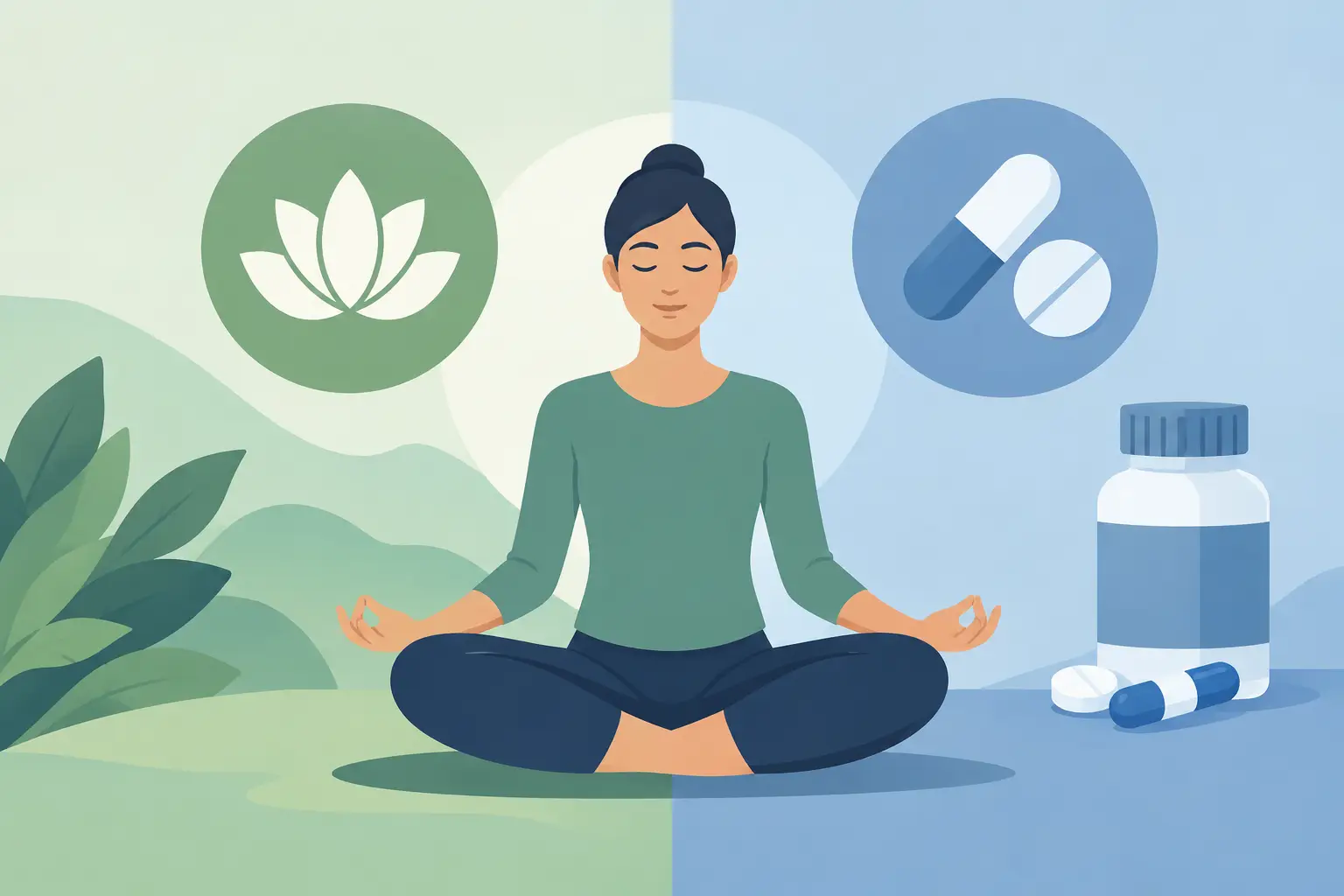
A pain flare can make every choice feel urgent: Take something now? Push through? Lie still and hope it passes? The conversation around meditation versus pain medication is not about proving that one option is morally better than the other. It is about giving yourself more than one path toward relief, with safety, compassion, and personal agency at the center.
Pain is real, whether it is sharp, aching, burning, recurring, or tied to stress and emotional exhaustion. You do not need to earn support by suffering longer. Medication can be an appropriate and necessary part of care for many people. Meditation can also become a practical skill that helps you change your relationship with pain, calm the stress response, and create more room for ease in daily life.
Why pain is more than a physical sensation
Pain begins with signals in the body, but the experience of pain is influenced by far more than tissue, joints, or nerves. Poor sleep, grief, fear, anger, pressure at work, old emotional wounds, and the belief that a difficult moment will never end can all amplify the nervous system’s alarm.
This does not mean pain is “all in your head.” It means your whole self deserves care. When the nervous system is on high alert, the body may tighten, breathing may become shallow, and ordinary discomfort can feel overwhelming. A holistic approach makes space for physical treatment while also tending to the emotional, mental, and spiritual patterns that may be keeping the alarm switched on.
For a caregiver who never gets a true break, or a working adult who holds stress in their neck, back, or jaw, pain relief may involve more than treating a symptom. It may also involve learning how to pause, release judgment, notice what the body is carrying, and respond with a new habit.
Meditation versus pain medication: different jobs, not enemies
Pain medication generally works by changing pain signals, inflammation, muscle tension, or the way the brain processes discomfort. Depending on the medication and condition, it may provide fast, meaningful relief that makes it possible to sleep, move, recover from an injury, or participate in physical therapy. For acute pain, post-surgical pain, severe migraines, inflammatory conditions, and many other situations, medication may be an essential medical tool.
Meditation does something different. It trains attention and awareness. Rather than promising to erase every sensation, it can help you notice pain without immediately adding panic, resistance, catastrophic thoughts, or muscular bracing. Over time, this practice may help reduce stress-related amplification of pain and build confidence in your ability to meet difficult moments.
The trade-off is timing. Medication may work relatively quickly, though it can also bring side effects, interactions, tolerance concerns, or dependence risks depending on the type and duration of use. Meditation has few physical side effects and is available anywhere, but it is a learned practice. It may not feel powerful on day one, particularly when pain is intense or your life feels overloaded.
Neither approach should be treated as a one-size-fits-all answer. A person with a new, severe symptom needs medical evaluation, not pressure to meditate through it. A person who has relied on medication for years may benefit from adding self-management skills, but should never stop or change prescribed medication without guidance from a qualified clinician.
What meditation can offer when pain keeps returning
Meditation is often misunderstood as sitting perfectly still with an empty mind. Real practice is much more human. It can be two minutes of breathing before a stressful meeting, a body scan while lying down, a quiet walk, or a moment of placing a hand on your heart and asking, “What do I need right now?”
For recurring pain, meditation can support several important shifts. First, it gives your nervous system practice in moving out of fight-or-flight. A slower exhale, softened shoulders, and attention anchored in the present can signal greater safety to the body.
Second, meditation helps separate the sensation from the story around it. You may notice, “There is a tightness in my lower back,” instead of, “My body is failing me and this will ruin my whole week.” That shift is not denial. It is a way to reduce the extra layer of fear that can make pain feel larger.
Third, regular practice can reveal patterns. Perhaps headaches rise after skipped meals and conflict. Perhaps knee pain feels more intense after a restless night. Perhaps you hold anger in your chest long after a conversation ends. Awareness creates choices, and choices create freedom.
A simple practice for a difficult moment
When pain or stress rises, try this gentle three-minute reset. Choose a supported position. You can sit in a chair, recline, or lie down if that is more comfortable. There is no prize for forcing a posture that hurts.
Begin by looking around the room and naming three things you can see. This helps orient your nervous system to the present. Then breathe in naturally and allow the exhale to be a little longer, without straining. On each exhale, silently say, “Softening” or “I am here.”
Next, bring attention to the painful area with curiosity rather than criticism. Ask yourself whether the sensation is hot, cool, pulsing, tight, dull, or moving. If direct focus makes the pain feel worse, shift attention to a neutral area, such as your hands or feet, or return to the feeling of support beneath you.
End by asking one practical question: “What is the kindest next step?” The answer might be water, rest, a prescribed treatment, a call to your doctor, a brief walk, or a boundary with someone who is draining your energy. Meditation becomes useful when it supports wise action, not when it asks you to ignore your needs.
When medication may be the right support
There is no virtue in avoiding medication that has been appropriately recommended for your condition. Relief can help you regain mobility, sleep, and the capacity to participate in healing activities. For some people, medication creates the stability needed to begin meditation or other supportive practices.
Talk with your prescribing clinician or pharmacist if side effects are interfering with your day, if you are taking multiple medications, or if you want to reduce reliance on a medication. Ask about your specific diagnosis, options, risks, and a plan that supports your goals. If opioids, sedatives, or other medications that can cause withdrawal are involved, do not stop suddenly without medical direction.
Seek urgent medical care for chest pain, trouble breathing, sudden weakness or numbness, confusion, a severe new headache, loss of bladder or bowel control, high fever with severe pain, or pain after a serious injury. Meditation is a supportive wellness practice, not a replacement for emergency or diagnostic care.
Creating a fuller pain-relief plan
The most empowering question is often not, “Which one wins?” It is, “What combination of support helps me live with more ease?” Your plan may include medical care, gentle movement, restorative sleep, nourishing food, therapy, physical therapy, spiritual practice, and techniques for releasing stress and emotional charge.
Start small enough that you can actually continue. Try a five-minute meditation at the same time each day for two weeks. Keep a simple note of your pain level, sleep, stress, medication use, and what seemed to help. The goal is not perfection or instant transformation. The goal is to understand your own patterns and strengthen your ability to respond.
At EnergyMDT, the focus is on practical, healing-oriented tools you can return to when life gets hard. You are not powerless in the presence of pain. Even when medication is part of your care, you can learn skills that help you feel less controlled by stress, fear, and old patterns.
Do NOT let pain make every decision for you. Give yourself permission to seek medical support when needed, to rest without guilt, and to practice one moment of inner calm at a time. Your next breath can be a small, real step toward more ease, joy, and a life that feels like yours again.


